
Recent reports have brought attention to a dispute involving McCormick & Company and the amount of pepper included in their iconic tins.
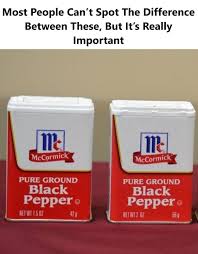
According to these reports, some consumers—and even industry competitors—have expressed concern that the net weight of McCormick’s pepper has decreased from roughly 8 ounces to about 6 ounces. Watkins Inc., another long-standing player in the spice industry, has publicly questioned the change.
The company argues that McCormick’s updated packaging may give the impression that the containers hold more pepper than they actually do. McCormick, however, maintains that the weight is clearly labeled on every tin and that all their packaging complies fully with regulatory standards.
Much of the debate centers on the different packaging strategies used by the two companies. McCormick continues to use its traditional opaque tins, which preserve the brand’s familiar appearance but prevent consumers from seeing how much product is inside.
In contrast, Watkins packages its pepper in smaller transparent containers, allowing shoppers to assess the quantity visually. Watkins contends that these contrasting approaches may cause confusion for customers who compare the products side by side. McCormick disagrees, emphasizing that their labeling provides all the information shoppers need to make an informed decision.
This situation has sparked broader discussions about packaging practices across the spice industry. Some consumers report feeling uncertain about how much product they are receiving, especially when container size does not align with their expectations.
McCormick reiterates that the net weight is always stated on the label, enabling customers to verify the exact amount before purchasing. Meanwhile, several consumers have raised concerns through legal channels, and related cases are currently under review in federal courts. No final rulings have been issued so far, and the conversation continues to develop.
Ultimately, the case underscores the importance of transparency and clarity in maintaining consumer trust. When product information is straightforward and reliable, shoppers feel more confident in their purchases, strengthening long-term loyalty to a brand.
The ongoing debate between McCormick and Watkins serves as a reminder that even seemingly minor changes in packaging can shape perceptions of value and quality. For consumers, it highlights the importance of checking labels carefully. For businesses, it reinforces the need for honest communication and thoughtful design. In the end, trust remains one of the most valuable assets any company can protect—and it is upheld through consistency, clarity, and transparency.